Remodeling a Coastal Home: What Salt Air and Fog Change
What actually fails near the water — vanity boxes, fixture finishes, fan housings — and the material and ventilation choices that prevent it.
If your house is within a few miles of the water, salt air and fog quietly change what you should build with. Not everything — structure, layout and plumbing are the same anywhere — but every material that meets moisture or air has a shorter life on the coast than it does inland, and most remodels are specified as if it does not.
Here is what actually fails, and what to use instead.
What salt air and fog actually do
Two separate forces, often confused.
Salt air carries chloride, which accelerates corrosion on metals. It reaches surfaces as airborne mist and settles — and unlike rain, nothing washes it off interior fixtures. It attacks fasteners, fixture finishes, fan housings, hinges and anything plated.
Fog-belt humidity is about sustained moisture rather than chemistry. Air that rarely dries out means wood-based materials stay swollen, paint films stay soft longer, and anywhere with poor air movement grows mould.
A house can have one without much of the other. Most Pacifica and Half Moon Bay homes have both.
Cabinetry and vanities
This is where it shows first, and it is almost always the same failure: particleboard boxes swelling from the bottom edge up, usually under the sink, usually around year eight to ten.
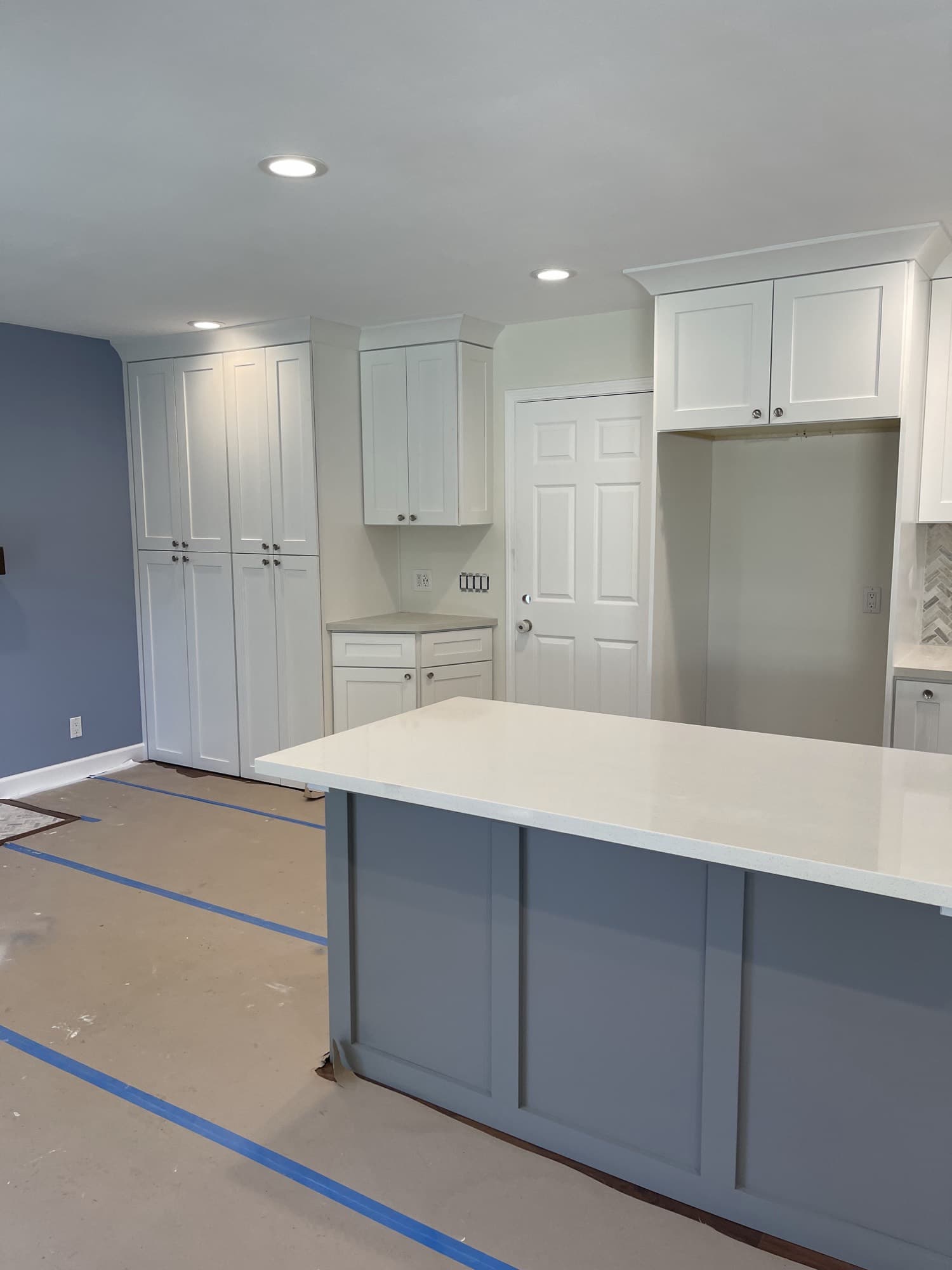
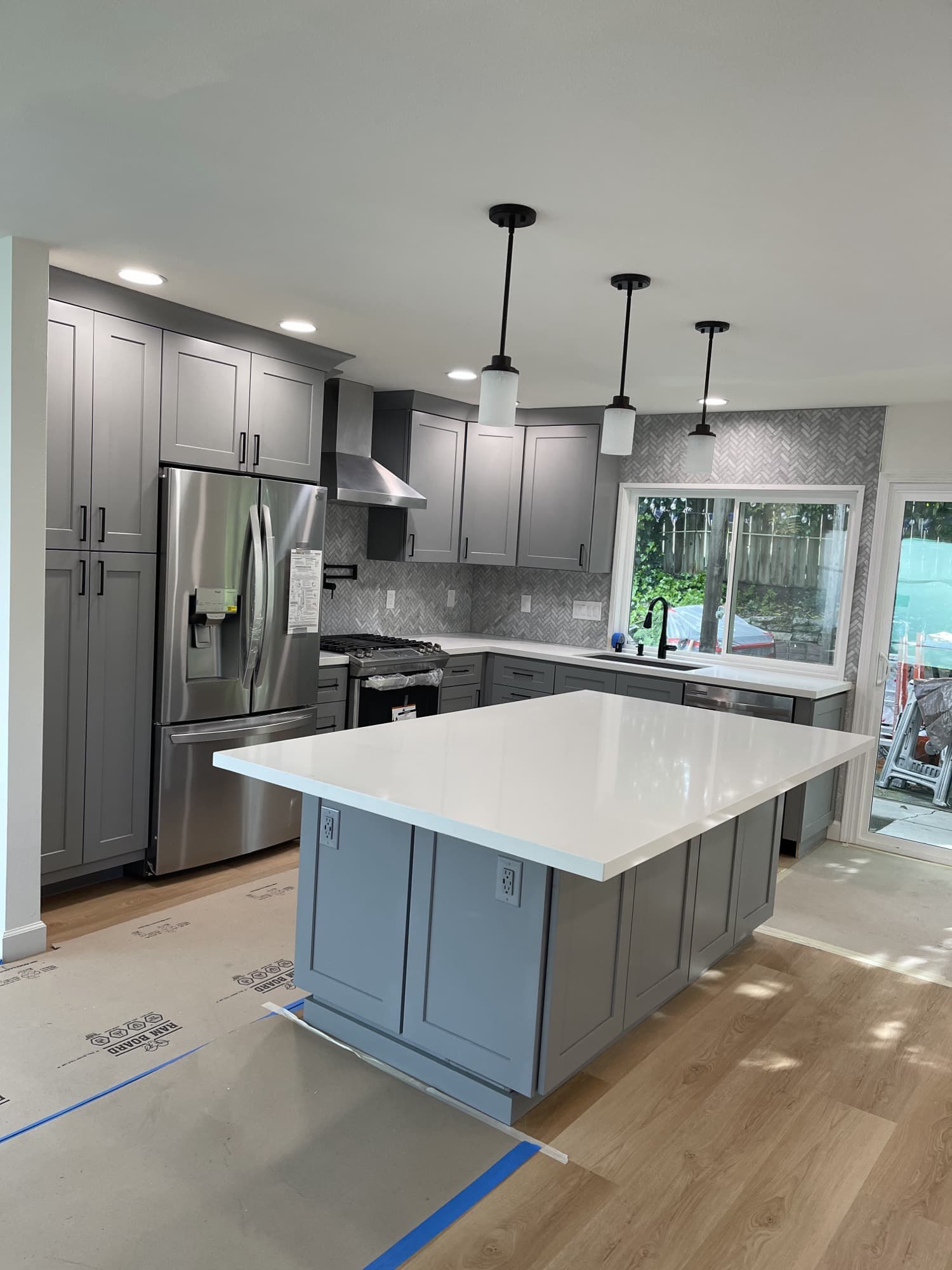
- Use plywood boxes rather than particleboard, especially for sink bases and anything against an exterior wall
- Seal the cut edges, including the ones nobody sees
- Choose a durable catalysed finish over a thin factory coat
- Leave air movement behind and under the cabinet where the design allows
Our guide to custom vs semi-custom vs stock cabinets covers how box construction differs between the three tiers — on the coast, that difference is the whole decision.
Hardware, fixtures and finishes
The honest rule: the more delicate and fashionable the finish, the worse it ages near salt air.
- Living finishes — unlacquered brass, oil-rubbed bronze — are designed to patina. On the coast they do it fast and unevenly.
- Standard chrome and plated finishes pit and spot.
- Marine-grade stainless, PVD finishes and good powder coats hold up far better.
Ask your contractor what the manufacturer rates the finish for, and whether the warranty excludes coastal installations — some do, which tells you everything.
Ventilation is a material decision
The single most effective anti-moisture measure in a coastal home is not a product. It is moving damp air out of the building.
That means an exhaust fan sized for the actual room, ducted in as short and direct a run as the framing allows, terminated outside — never into an attic or a soffit. California's Title 24 sets requirements here; near the water, treat the code number as the floor rather than the target. More in bathroom ventilation and Title 24 and how Title 24 affects a remodel.
In kitchens the equivalent is a properly sized hood with real exterior venting, plus make-up air where the appliance load calls for it.
Behind the tile
Tile is waterproof. Grout is not, and neither is the wall behind it.
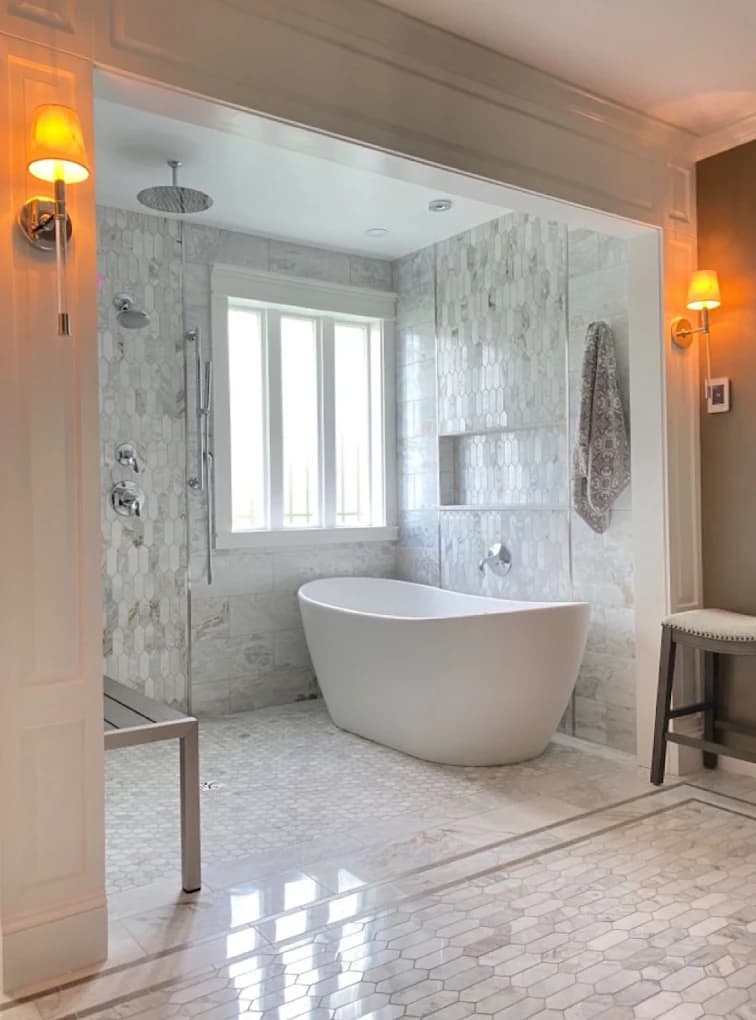
On the coast especially, a shower needs a continuous waterproofing membrane with properly lapped seams, not cement board and sealant at the joints. The slope and the drain have to be established correctly before anything is set — and on a curbless shower that is the entire job. See curbless walk-in showers.
Paint, trim and exterior-facing walls
West-facing walls take the most weather and the most sun. Expect paint systems to need recoating sooner than the tin promises, and prioritize preparation over product: the failure is almost always adhesion, not the paint itself.
Inside, exterior-facing walls are where condensation forms. If you are opening them anyway, that is the cheapest chance you will ever have to improve the insulation and the air sealing.
Countertops
Less dramatic here, but worth knowing. Quartz is engineered and stable. Natural stone is fine but needs its sealing schedule kept — and on the coast "I'll get to it" turns into a stain faster. Our quartz vs quartzite vs marble comparison goes through the trade-offs.
Coastal remodeling FAQ
Does salt air really reach inside the house?
Yes. It travels as airborne mist and settles on interior surfaces, and nothing rinses it off indoors. That is why interior fixture finishes degrade faster near the water than the same fixtures inland.
What is the single best thing I can do for a coastal bathroom?
Ventilation. A correctly sized fan, ducted properly to the outside, does more for the lifespan of the room than any finish upgrade.
Is particleboard ever acceptable near the coast?
For a sink base or an exterior wall, no. Plywood boxes cost more up front and remove the most common ten-year failure entirely.
Do I need special windows or doors?
Not necessarily special, but hardware and finish matter, and so does the installation detail. Water gets in at flashing and sealant failures far more often than through the unit itself.
Will a contractor from inland know this?
Some will, many will not — it is not that they are careless, it is that the failures do not show up in their work. Ask specifically what they would change about their standard specification for a house near the water. The answer tells you a lot.
Building near the water?
CFCC is based in Pacifica and holds California contractor license CSLB #1103846. We build on this coast every week, and we specify for it as a matter of course rather than as an upgrade.
Book a free consultation, or read about remodeling in Pacifica.